On Trend
In recent years I have noticed a popular rise in European aesthetics. From fashion to makeup all the way to foods and interior design people in the good ole US of A have been fascinated by the European ways. As I look on social media I see a lot of popularity in cottages in the Cotswolds, European farmhouses, and the French countryside. I have always had a fondness for this style and am so happy to see it becoming popular! Creating a European style home in the States is possible but takes a bit of doing. I’ll share how we are tackling the challenge and why I think European style is currently so popular.
Why European Aesthetics?
I want to start by breaking down why I think European style is so popular in the United States.
– Unique
First and foremost, I believe people in the US like the fact that European homes bring a different style into the mix. Most modern day homes in the States are very similar. Depending on where you live there may be slight variations from state to state but overall there’s a lot of similarity. You also learn what’s common in your area.
For instance, if I drive through any track home style neighborhood I can tell you an approximate floor plan and tell you what the interior almost assuredly looks like with pretty high accuracy without ever having stepped foot in the house. Even though we are creatures of habit and like familiarity, especially in our homes, we don’t really want to have cookie cutter houses.
Many European homes are very different from what we have here in the US and let’s face it, that just feels exciting and new. The historic homes especially bring a certain feel that is ever growing in popularity. This takes us nicely to our next category.
– Practical
Rustic farmhouses in the south of France, a cozy Cotswold cottage, or a little Italian villa are all epitomes of European homes that us Americans often envy. One thing I’ve noticed about a lot of these homes are the practicality of them.
Because many of the European style homes we are currently fawning over are historic they all have one thing in common – they are simple. Rustic, textured, full of character, yes, but they are simple. The homes often don’t have a pantry or closets. If they do have closets they certainly aren’t walk-in closets like many of us have here.
Because of this a lot of the homes feature open storage, furniture pieces used as storage such as armoires instead of closets, and they have built in the things they use day to day as part of the home and it’s decor. For instance, hooks on the wall where tools hang, mixing bowls on kitchen shelving, and the like. The day to day items used become decor. This brings beauty, practicality, and the less is more that we all crave today.
– Cozy
We’ve finally made it to the category I imagine most people first think of when it comes to the warm, inviting, and charming cottages of Europe and that’s the cozy factor. In recent years we have seen a surge in cottage core or grandma chic and this all ties in beautifully with the inspired cottages we see in countries like England or France. The imperfect features they boast make the space perfect. The creaky wooden floorboards, the off centered ceiling, the exposed beams, and rough plastered walls all bring a certain charm, and that uniqueness we talked about earlier.
Cottage doesn’t have to mean daisies and doilies. There are any number of styles that can work within the cozy Cotswolds. Be it the bright and cheery, or maybe moody and eclectic like an old London pub – whatever the aesthetic a small and simple home (which is the definition of cottage) can carry all of these styles beautifully. It’s my belief that the more quirky and unique areas of a home the more we get this at home “cottage” feel.
How Can You Achieve a European Style Home in the USA?
Now, it can be difficult to truly mimic an old historic home in Europe in a house positioned in the United States. I think one of the first things to recognize is, that unless you have endless amounts of money, it is hard to get it to feel or look exact. That doesn’t mean; however, that you cannot have aspects of an English style home in the US – it just might take a little out of the box thinking.
My husband and I had our home custom built. Budget was definitely a concern and we were building at a bad time economically so concessions were made and DIY projects have been and will continue to be completed. Here are some key aspects to a home that I would suggest looking for whether you are building or buying. After we discuss the structure itself, we will discuss how to make a home stylistically feel more European and this may be more helpful for the bulk of readers as most of you probably aren’t looking to buy or build a new home ;).
What to Look for in the Home’s Structure
Closed or historic floorplan –
The open floor plan only became popular around the 1950’s and mainly became more mainstream in the 90’s. A closed floor plan can feel more intimate and cozy than open. It also allows for privacy in areas of the house that many people are beginning to realize are helpful and important – especially post COVID (dun, dun, dun). For example, while European homes don’t generally have large pantries or closets, we do in the States, so in a case like this go with a historic American floor plan in those areas. Create or opt for a butler’s pantry for instance to give the look and feel of historic and cozy while having modern convenience in the area you live – the two marry well together.
Wood and textures –
European homes use A LOT of wood. They also don’t shy away from textures in plaster, stone, and cast iron. Unique tiles, imperfect cuts, and reclaimed pieces will all provide that European look and feel.
Fireplaces –
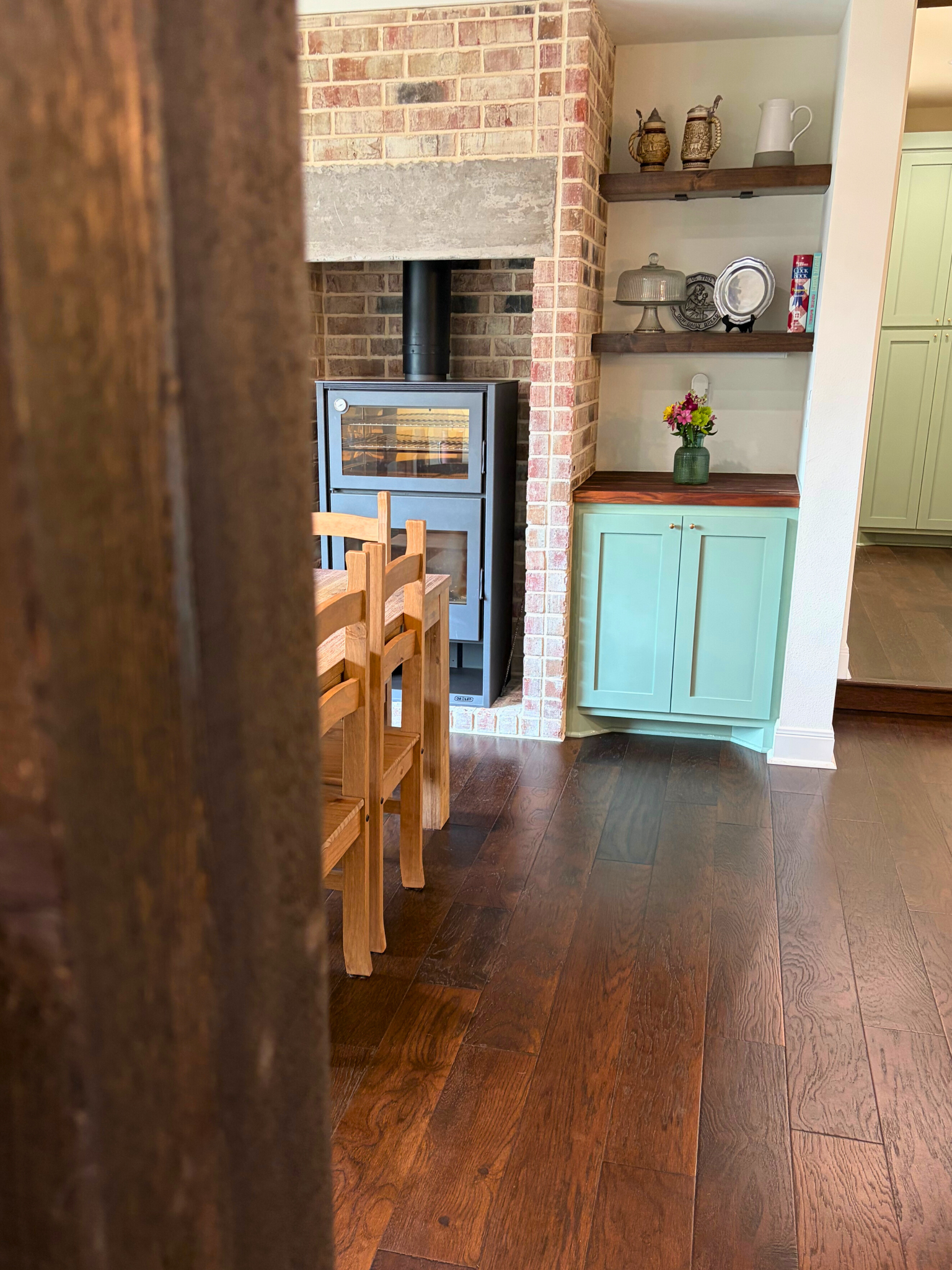
Sadly, many modern homes are losing fireplaces altogether, but most European and pretty much all historic homes have at least one if not many more fireplaces. Without central heat and air in much of Europe they rely on airflow and heat sources like a fireplace to make it a livable (and extra cozy as a bonus) space.
Windows –
Windows and doors, especially made of wood give a European feel. If you can afford to have casement or awning windows, French doors, Dutch doors and the like these all give the European aesthetic well. They allow airflow and plenty of bright light giving it the historic while simultaneously airy feel we all know and love.
Unique nooks and crannies –
Opt for a home with built in’s, steps randomly through the house, angled staircases, etc.
Small-ish –
The definition of cottage after all is a small and simple home. European homes are generally not thousands of square feet like they are in the States. They often have a smaller footprint, lower ceilings, and this all allows for a cozier feel naturally.
Interior Design
Now that we’ve discussed the structure of the home that gives a more European feel, let’s chat about the design factor. There are even some tricks in design that can mimic the look of a home to make it seem like structurally you have a European house. Let’s break it down.
Textures –
Texture is hugely important in cozy cottages, Italian villas, or French farmhouses. They all have a lot of wood, stone, tile, and plaster used. Now you may not be able to affordably plaster all your walls and may be stuck with that orange peel texture (not the kind of texture we want) but it doesn’t mean you cannot distract from that and play off other features that boast a European charm. Adding in faux ceiling beams, playing with curtains, bold patterns or print on furniture, blankets, and pillows can all add beautiful layers that give the initial look and feel of cottage core or rustic farmhouse. Layering textures, rugs atop hardy wood floors, embracing nicks and scrapes that make a space feel lived in, and using the warmth of woods, metals, and stone can all bring the feel to a home that we love from the European homes.
Don’t be afraid to mix metals, use items made of cast iron and display them, highlight spaces like your mantel opting for wood or plaster. I plan to share a DIY ceiling beam tutorial soon that my husband and I did on our own (even while I was 8 months pregnant). Utilize open shelving, antique furniture mixed with some new, and don’t be afraid to put holes in the wall adding layers there too. You don’t have to just put pictures on the wall, you can add shelves, hooks, hats, brooms, baskets, etc.
Lighting –
Whenever we talk cozy, lighting always comes up. That is because lighting changes everything. Make your home feel like a dark and moody pub with warm amber low lit lighting. Go with the airy and bright cottage with windows open, sheer curtains swaying in the breeze, and focusing on a lot of natural light. Don’t shy away from candles, table or floor lamps, or fireplaces especially in the evenings. While a home should have a lot of clean and bright decor, you still want to have some juxtaposition between light and dark. Layer a light colored rug on a dark wood floor, have lighter furniture pieces with warm patterned throw pillows and blankets. Make the space feel warm against day or evening lighting but not austere or clinical, or dark and depressing.
Natural –
When it comes to an old European home, think natural styling. We have talked a lot about the use of wood, plaster, and stone. That comes in to play with the big and the small items of a home. It isn’t just the structure or the large bold pieces, but it’s the small intimate things that also need to be made of these natural and warmer materials. Wooden wall hooks that hold useful items like a wood and wicker broom, baskets used for flower picking or gardening hanging on the wall, boots by the door, a worn rug in the kitchen, mixing bowls precariously atop kitchen shelves all bring beauty, interest, and warmth to a space. All of the items are useful, practical, but add decor.
Think about a perfectly styled French bedroom in a magazine picture. A lot of the time things that draw your eye and make a space look cozy and lived in, that ooze that European je ne sais quoi are things like a cardigan draped over the back of a chair, or maybe hanging on the bedroom door’s knob. An armoire with a slightly ajar door and just a subtle peek into the wardrobe, a tray with bottles of perfume, skincare, or makeup lying about, or a small plant sitting on the window sill are all small simple aesthetic additions that bring an otherwise plain space to life. If styled correctly, your bedroom can look like it’s straight out of a Parisian magazine too!
Imperfect –
I cannot say it enough, but when it comes to the European style embrace the imperfect. Go for the old, the furniture that has character, the mixing bowl that has a chip in it, the brass handles that are well worn. Many of the most popular European homes online that are drool worthy have a lot of imperfect quirks. Sometimes, this comes to the dismay of the owner who has to style their home around a wall that is completely crooked, but it exudes the charm us Americans love so much. It isn’t the perfect 90 degree angled wall we get tired of seeing, or a white and austere hallway of perfected angles. It feels soft, warm, and inviting.
Those imperfect features are what gives the home character and a life of it’s own. You can create that especially overtime if you curate a home full of history whether it’s old (antique pieces brought in) or new scrapes on the table made by your toddler, or scratches on the wood floors made by your dog. Each little feature is the imperfectly perfect story of your home.
Embrace the Slow Process
Creating a European inspired home can take a lot of time. While my husband and I built out a home with a floorplan that matches to similar ones in Europe, and while we have ceiling beams (some of which we did ourselves), and wooden floors (faux), it still feels very American. The rest will come in the styling and that is taking time. We have several DIY projects we would like to do, and are constantly on the search for antique or vintage pieces that are just right for each little area of the home. I am taking it very slowly allowing the home to feel incomplete in areas until we find the right thing or it’s the right time to complete that space.
I also know that I don’t live in Europe and that no matter how much I would love to have a cottage in the Cotswolds or a farmhouse in the south of France, I can only do so much (at least within my budget) to create an inspired home such as those. It is all about mindset and marrying the ideas of embracing the inspiration and the love of the look and feel of those cozy European homes, with the honest understanding that our lives and what we have access to, what is safe and within code, and what works in the US is at the end of the day different than that of Europe. No matter that we can’t have the exact replica.
The beauty of the European home in the United States is that marriage of the two styles because they are beautiful and unique when brought together – exactly what we all seem to be craving!
Want More European Inspiration?
I absolutely love the European style but I also love a lot of their mindset. They tend to be of the mind that family is incredibly important, quality over quantity, and they find beauty in simplicity. All things I love and admire and strive for myself. In the Homemaking section of my blog I talk a lot about how to simplify life no matter how busy you are. Check out my Living Moderately post where I discuss how to live more simply, or Creating a Traditional Style Home Life if you want tradition in more than just the style of your home. If you are looking for more decor inspo check out my Finding the Perfect Rug for Your Cozy Home post or if you have kiddos my post all about my Daughter’s Bedroom decor.